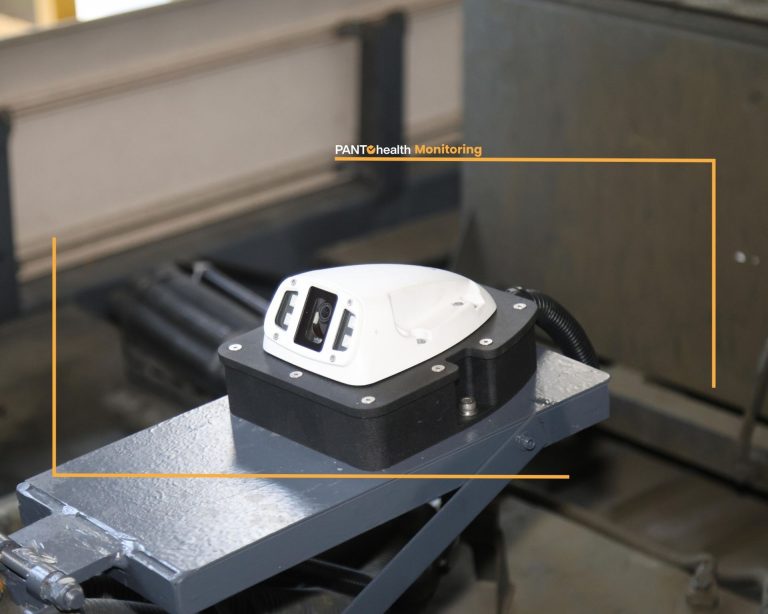
PANTOhealth has reached a major milestone in the PantoTECH project: our pantograph–catenary monitoring system has been successfully installed, integrated and commissioned on a tram operating within the Konya public transport network.
The installation was completed between 6 and 11 August 2026 through close cooperation between the PANTOhealth team and the technical teams of Konya Metropolitan Municipality’s Transportation Department and Rail Systems division.
The system is now collecting data during normal passenger service and transferring it to the online PANTOhealth monitoring platform. Checks performed after the tram’s first operational runs confirmed that the onboard devices were working reliably and that the collected data was being transferred successfully.
This means that everyday tram journeys in Konya can now contribute directly to understanding the condition of the overhead contact line.
From everyday tram operation to infrastructure intelligence
Traditional overhead line inspection often depends on scheduled inspections, dedicated measurement vehicles or maintenance activities performed outside normal operating hours. These methods remain necessary, but they may provide only periodic views of infrastructure condition.
PantoTECH introduces a complementary approach.
By installing monitoring technology on an operational tram, data can be collected while the vehicle runs its regular passenger routes. The pantograph becomes a continuous source of information about its interaction with the overhead contact line.
Instead of waiting for the next dedicated inspection, maintenance teams can build a more frequent and location-based picture of how the infrastructure is performing under real operating conditions.
The monitoring process supports three practical objectives:
- identifying unusual pantograph–catenary interaction at an earlier stage;
- tracking how the condition of a location changes across repeated journeys;
- helping maintenance teams prioritise inspections according to observed asset condition.
This creates a foundation for moving from mainly time-based and reactive maintenance towards more preventive and condition-based decision-making.
What the PANTOhealth system monitors
The onboard PANTOhealth solution combines sensors, cameras, positioning technology and data processing to monitor the interaction between the tram’s pantograph and the overhead line.
During operation, the system collects vibration and impact data associated with the pantograph–catenary interaction. The measurements are connected to their geographical location and can be reviewed with synchronised visual information.
Collected data is transferred to the PANTOhealth online platform, where it can be organised and analysed across the network. The platform helps technical teams:
- locate monitored points on a map;
- review impact and vibration measurements;
- compare repeated passages at the same location;
- examine synchronised video and sensor data;
- identify changes and recurring anomalies;
- assign maintenance statuses to specific locations;
- prepare location-based inspection reports.
The objective is not simply to generate more data. It is to make the data usable for maintenance planning.
When an unusual interaction is detected, the maintenance team can review its location, measurement history and visual evidence before deciding whether an on-site inspection is required. This can help direct technical resources towards the locations that need attention first.
Why monitoring during passenger service matters
A defect or developing irregularity does not always appear clearly during a single scheduled inspection. Some issues are intermittent, while others become visible only when the pantograph and overhead line interact dynamically at operating speed.
Monitoring during normal service helps address this gap.
Repeated tram journeys create a growing history for monitored locations. Instead of viewing each measurement in isolation, technical teams can compare results over time and look for changes in behaviour.
For example, if repeated passages show increasing impact levels at the same geographical point, the location can be prioritised for closer examination. The maintenance team can then use the available sensor data, trend history and video footage to support its assessment.
This does not replace engineering judgement or physical inspection. It helps maintenance professionals decide where and when those resources are most needed.
The result is a more focused maintenance process based on actual operating evidence.
An important first for PantoTECH in Türkiye
Konya is one of the PantoTECH pilot locations and the first city in Türkiye where the project’s monitoring system has been put into operation.
According to Konya Metropolitan Municipality’s official announcement, installation, integration and technical checks were completed successfully. Initial operational checks also confirmed stable system performance and continuous data transfer from the tram.
The Konya deployment will provide practical experience from a live urban rail environment. This will help the project partners evaluate system performance, analyse the collected information and refine how monitoring results can support real maintenance workflows.
For PANTOhealth, the pilot is also an opportunity to work directly with the engineers and technicians responsible for operating and maintaining the network. Their field knowledge is essential for connecting monitoring results with the realities of daily rail maintenance.
About the PantoTECH project
PantoTECH is a two-year European project focused on intelligent monitoring and predictive maintenance for overhead contact systems in tram and metro networks.
The project began in February 2026 and is financially supported by EIT Urban Mobility, an initiative of the European Institute of Innovation and Technology, a body of the European Union. Technische Universität Berlin coordinates the consortium, while PANTOhealth serves as the project’s technical partner.
The project responds to a common challenge across urban rail networks: fixed maintenance schedules may result in some components being inspected too early, while emerging problems elsewhere may remain unnoticed until they develop into faults.
PantoTECH aims to make overhead line maintenance more targeted by combining onboard monitoring, data analysis and practical maintenance workflows. The intended outcome is earlier detection of high-risk conditions, better prioritisation of maintenance activities and more reliable tram and metro operations.
The project is being developed and evaluated with partners in several European cities, including Konya, Istanbul, Prague and Debrecen.
Building the foundation for condition-based catenary maintenance
The successful installation in Konya is an operational starting point, not the end of the pilot.
As the equipped tram continues to run through the city, the system will collect measurements across repeated journeys. This growing dataset will allow the project teams to examine individual events, compare different passages and follow changes at specific locations.
The next stages will focus on analysing the collected data, validating detected conditions with the local technical team and connecting the findings with inspection and maintenance activities.
Over time, this process can help answer practical questions such as:
- Which locations require immediate technical attention?
- Which irregularities are recurring?
- Is the condition of a monitored point stable or getting worse?
- Where should an inspection team be sent first?
- What evidence is available before a physical inspection begins?
Answering these questions consistently is central to condition-based maintenance.
Collaboration behind the Konya installation
A live rail installation requires careful coordination between technology developers, vehicle specialists, infrastructure engineers and the transport operator.
We sincerely thank Konya Metropolitan Municipality Rail Systems for hosting the pilot and for the excellent technical cooperation before, during and after the installation. Special thanks go to Fatih Öge for his support throughout the work in Konya.
We also thank EIT Urban Mobility for supporting PantoTECH, Technische Universität Berlin for coordinating the project and collaborating closely with the consortium, and all PANTOhealth colleagues who contributed to the installation, integration and commissioning of the system.
The Konya pilot demonstrates what becomes possible when rail operators, researchers and technology teams work together around a real operational need.
Towards more proactive urban rail maintenance
Reliable overhead line infrastructure is essential for dependable electric rail transport. When maintenance teams have clearer and more frequent information about asset condition, they can make better-informed decisions about inspections, interventions and repair priorities.
With PantoTECH now operating in Konya, normal tram journeys are beginning to produce useful condition data from across the network.
For PANTOhealth, this is the purpose of railway condition monitoring: turning everyday operation into practical maintenance intelligence and helping technical teams detect developing problems before they lead to service disruption.
We look forward to sharing further results as the Konya pilot progresses.
Contact PANTOhealth to learn how onboard pantograph and overhead line monitoring can support condition-based maintenance across your tram, metro or railway network.
Frequently asked questions
What is PantoTECH?
PantoTECH is a two-year project developing intelligent monitoring and predictive maintenance solutions for overhead contact systems in tram and metro networks. It is coordinated by Technische Universität Berlin and supported by EIT Urban Mobility, with PANTOhealth serving as the technical partner.
What was installed in Konya?
PANTOhealth installed an onboard pantograph–catenary monitoring system on a tram in the Konya network. The system uses sensors, cameras, positioning and data processing to collect information about the interaction between the pantograph and overhead contact line.
Does the tram need to leave passenger service for monitoring?
Once installed and commissioned, the system can collect monitoring data while the tram performs its normal passenger-service journeys. This allows infrastructure condition to be observed without depending solely on dedicated measurement runs.
How can the system support predictive maintenance?
The system records repeated measurements at geographically identified locations. By comparing measurements over time, technical teams can detect unusual behaviour, observe developing trends and prioritise locations for inspection before a problem causes a failure or service interruption.
Does digital monitoring replace physical inspections?
No. Digital monitoring supports maintenance teams by helping them identify and prioritise locations that may require attention. Engineering assessment and physical inspection remain part of the maintenance process.
Why is the Konya installation significant?
Konya is the first city in Türkiye to put the PantoTECH monitoring system into operation. The pilot provides a live urban rail environment in which the technology and its role in maintenance workflows can be evaluated.